
My Cousin Guss
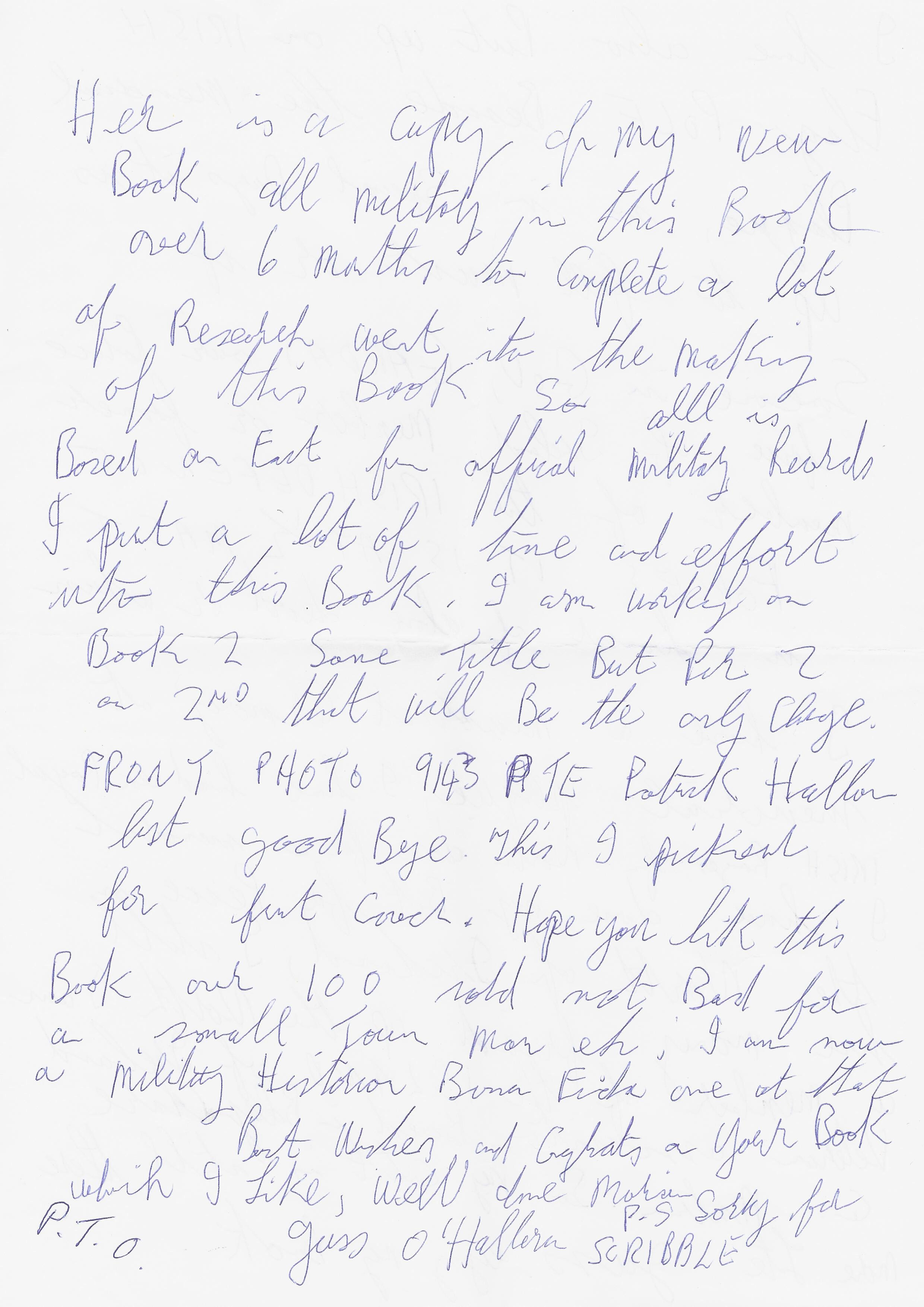
Guss's letter is breathless, much the way he spoke: 'I am now a Military Historian Bona Fide one at that Not Bad for a small town man eh'

The last time I saw my cousin Guss was in 1998, in his hometown, Ennistymon, County Clare. Guss was forever wandering around the town, so much so that we joked that there must be more than one of him, as he seemed to pop up wherever you happen to be, happily waving from the other side of the road as he did his rounds of the town.
I saw him every summer, as a child, when we visited my mother’s hometown. And I saw him a few times in England, too, visiting his aunts and uncles who, for many years, I believed to be his sisters and brothers. Whom he believed to be his brothers and sisters. He was ‘Uncle Guss’ back then, the youngest of a big family, until I found out his ‘aunt’ was really his mother. Irish families of that generation are full of secrets, and Guss’s true parentage remained a secret for some time. Once I knew, it was hard to remember who was in on the secret and who to be discreet with.
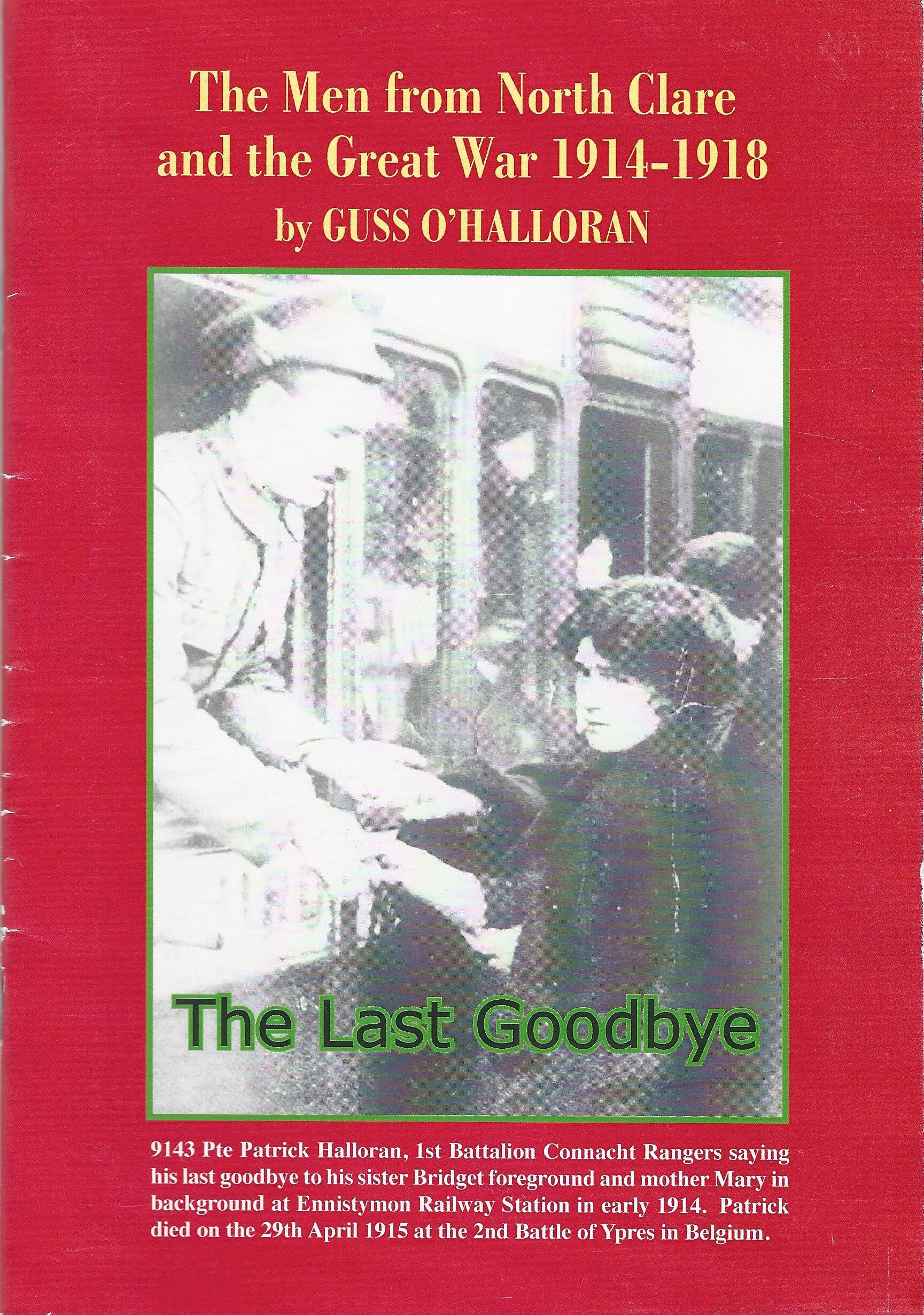
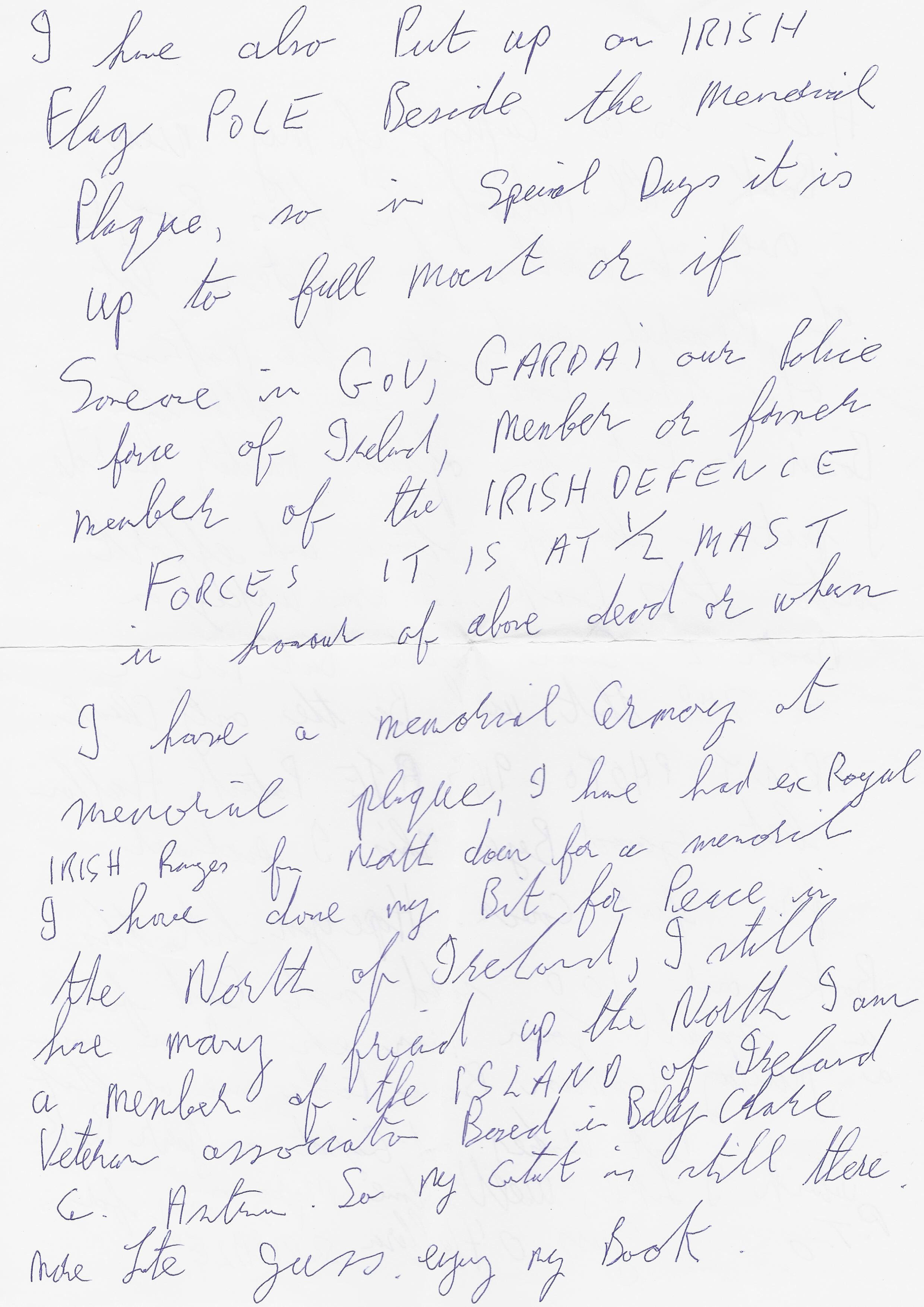
I came across a pamphlet this week that Guss sent me in 2012, along with a scrawled letter. My own first book had come out the year before, a poetry collection, strange fruits, and Guss and I exchanged publications by post. He was rightly proud of his work and the research that went into it. His letter is breathless, which is much the way he spoke, a chatterbox who tried my mother’s patience. She quickly ‘had enough’ of him on his visits, but there were plenty of other O’Hallorans for him to stay with, in Surrey, London and Kent, most more patient than my mother.
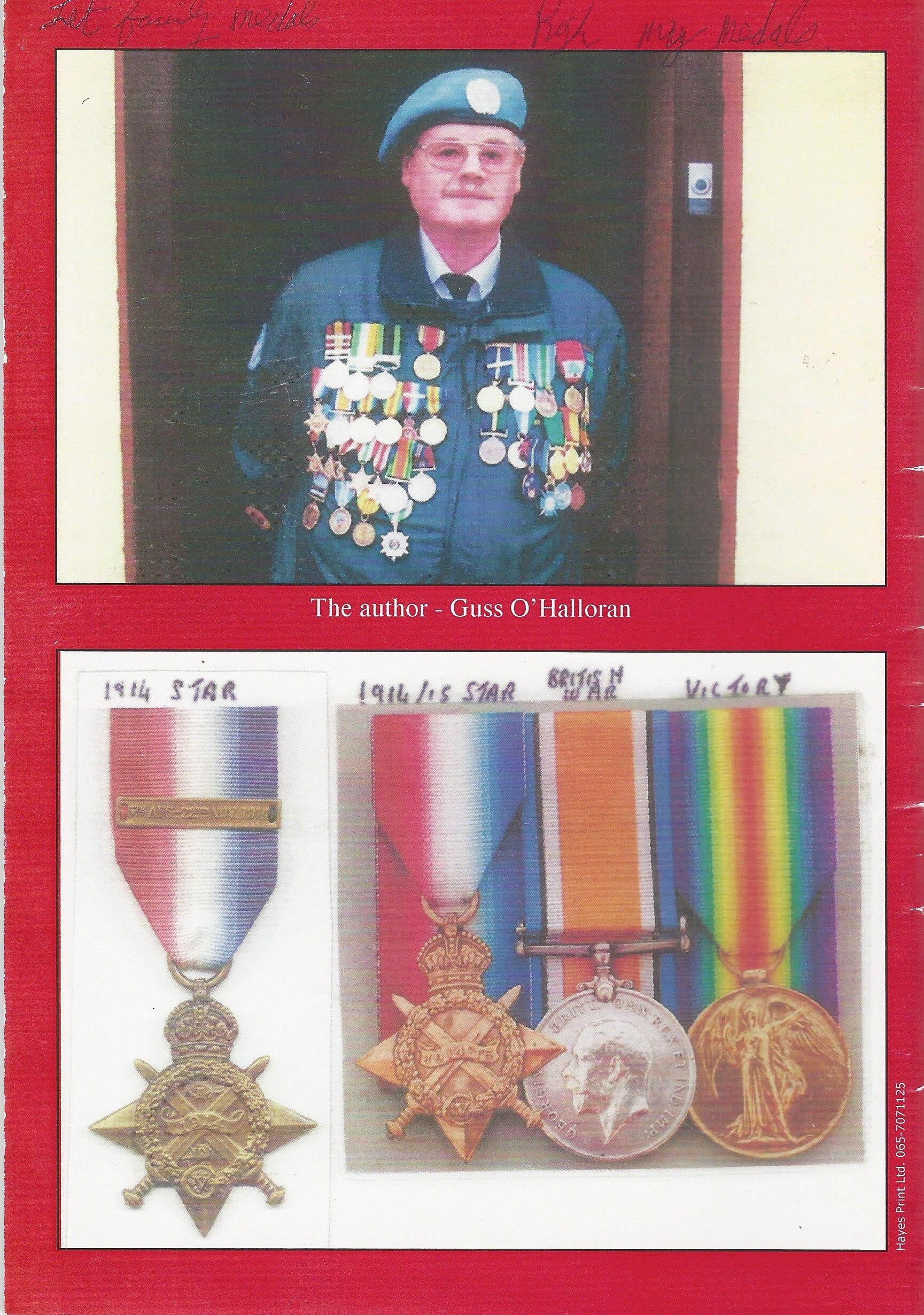
Guss’s pamphlet, The Men from North Clare and the Great War 1914-1918, has a photograph on the cover, a copy of which my mother had hanging in her living room. It is of Private Patrick O’Halloran saying goodbye to his sister Bridget and mother Mary at Ennistymon Railway Station in 1914. Patrick died the following year at the Second Battle of Ypres. It’s an intensely moving image. Patrick’s sister Bridget looks so sorrowful as Patrick holds both of her hands, looking straight at her while she turns her gaze away. Perhaps she could not bear to say goodbye. What is also remarkable is how alike Guss and Patrick were. I can’t quite work out the relationship, as Guss only gives Patrick’s date of death in the pamphlet. I think he was our great-great uncle.
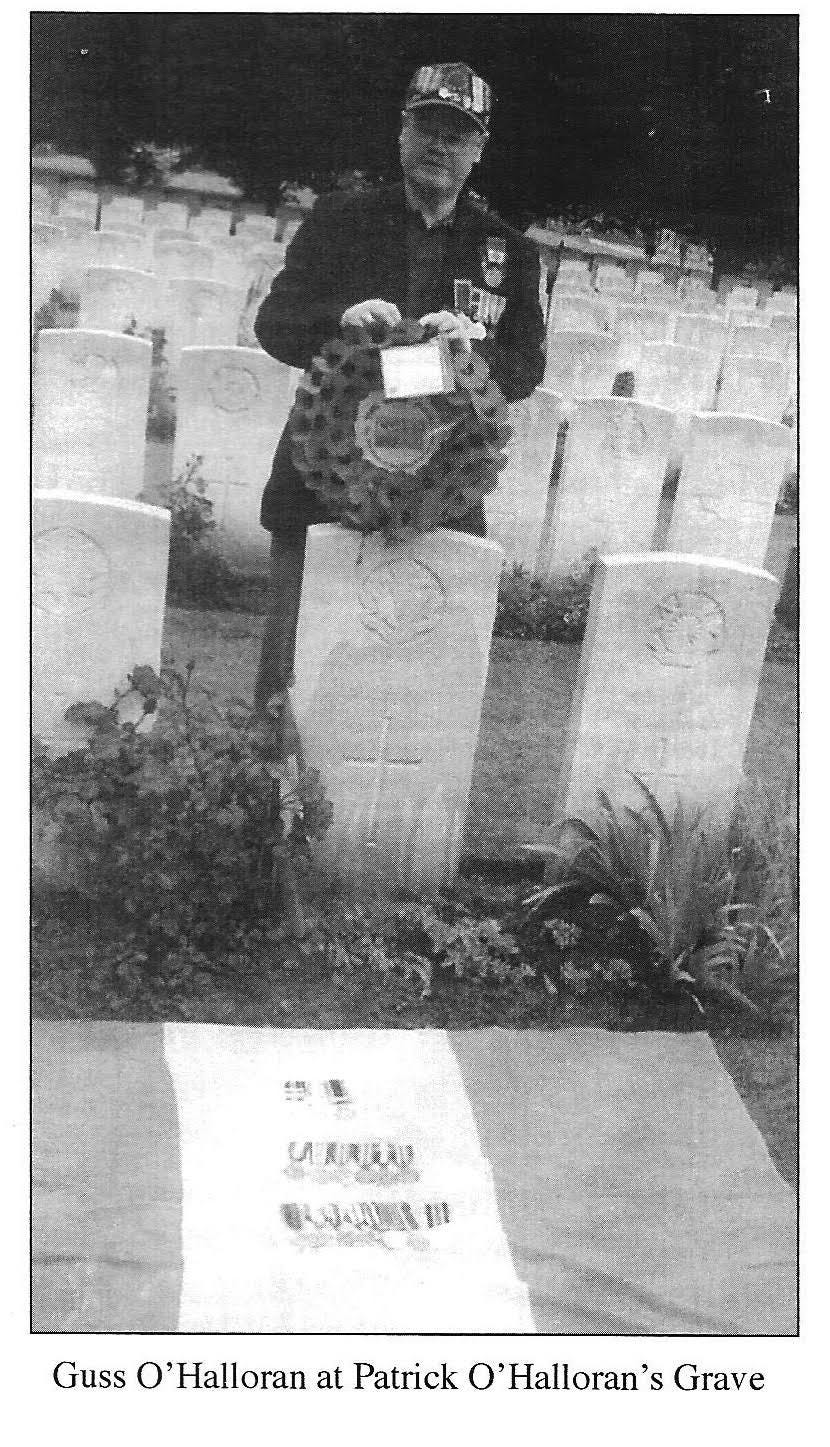
Whilst Guss was a keen researcher, and endlessly curious about his family, his record-keeping, sorting and ordering of information left a lot to be desired. Guss had learning disabilities as a result of his parentage, the family secret that some knew and others didn’t. In spite of his limitations, he joined the Irish Army and served in the medical corps, discharged for health reasons after being bullied by an officer. He had gone out to the Cliffs of Moher with the thought of ending his life. His Uncle George spoke up for him, and a medical discharge was arranged. The memory clearly stayed with Guss. I was with him once on the Cliffs when he told me that it was a suicide spot. I remember the way he looked at me as he spoke. I’d been through a period of depression myself, hadn’t really recovered, and was ‘home’ for a family wedding, the last place I wanted to be. I had left my own marriage less than two years before, and the wedding was just after the breakup of another relationship. Guss may have seen something in me that he had felt himself.
I think that was the last time I met Guss. We were Facebook friends for some years after, exchanged the books we had published in 2012, and a few years later, Guss’s chatty, long-winded posts on Facebook were silenced, as dementia stole his words. He died a few days after my own 60th birthday. He was only six or seven years older than me.
The truth about Guss, known by some and not by others, was that his parents were brother and sister. His mother, Chris, had spent some years at an Industrial School, the result of my grandfather going to the parish priest in desperation, unable to feed his large family. The answer was to send some of the children away to the now-notorious Industrial Schools. My mother told me that she came from school one day to find some of her brothers and sisters had gone. She had not known that they were leaving.
When Chris returned, she became pregnant by her brother Michael. She was 15 years old; 16 when Guss was born. Michael was 4 years older.
Incest is not unusual when siblings are separated as children, then reunited. When Guss was born, Chris was sent to England to join her sister, my mother, and the child was raised as my grandparents’ own. These arrangements may have been made, the secret kept, to protect Chris and her baby from ending up in a Magdalene laundry. So, I believed Guss to be my uncle, until sometime in my late twenties, his early thirties, when the truth came to light.
When visiting my Auntie Kathleen (my father’s sister) just 18 months ago, she told me that it was my mother who revealed the secret of Guss’s parentage. She did so to Auntie Chris’s husband, Bill. It was not her place to do so, and I’m convinced that she did so as a spiteful act. As I spoke to Kathleen, it became clear that my aunt hadn’t known that Guss was a child born of incest. Secrets, and parts of secrets, were revealed to different people.
The title of the chapter ‘Home Truths’ in my book, Learning to be Irish, refers to one of mum’s oft-used phrases: ‘I told her a few home truths’. Home truths were things she said to hurt people, to point out their faults. More often she peddled half-truths and ‘white lies’ to make herself look good, or to protect herself from shame.
When Guss died in 2019, the Parish death notice listed his ‘siblings’, in fact his aunts and uncles, and named his grandparents as his parents. Not all his siblings were mentioned: Michael was there, Christina was not. Shamed beyond her death, though the shame did not belong to her. Even decades after the secret came to light, I noticed some of my younger cousins, in Ennistymon, referring to the death of ‘Uncle Guss’. I was furious about the omission of Auntie Chris in the parish notice (she had died in 2012), and that my cousins had been told lies about Guss being our cousin. I didn’t think it was my place to put them straight.
There follows an extract from ‘Home Truths’, in Learning to be Irish.
Guss became the chronicler of the O’Halloran family, with a particular interest in those that served in the army […].
When Guss died, in 2019, his house was filled with papers on family history. Once he knew about his parentage, he was desperate to claim his true mother and to be accepted as a sibling by Chris’s other children. Uncle George told me that all the papers in Guss’s houses were burned after his death. A need to clear things out before George’s son Thomas moved in, or an attempt to erase a shameful secret?
Guss O’Halloran’s pamphlet can be read in full on the Clare library website: The Men from North Clare and the Great War 1914-1918
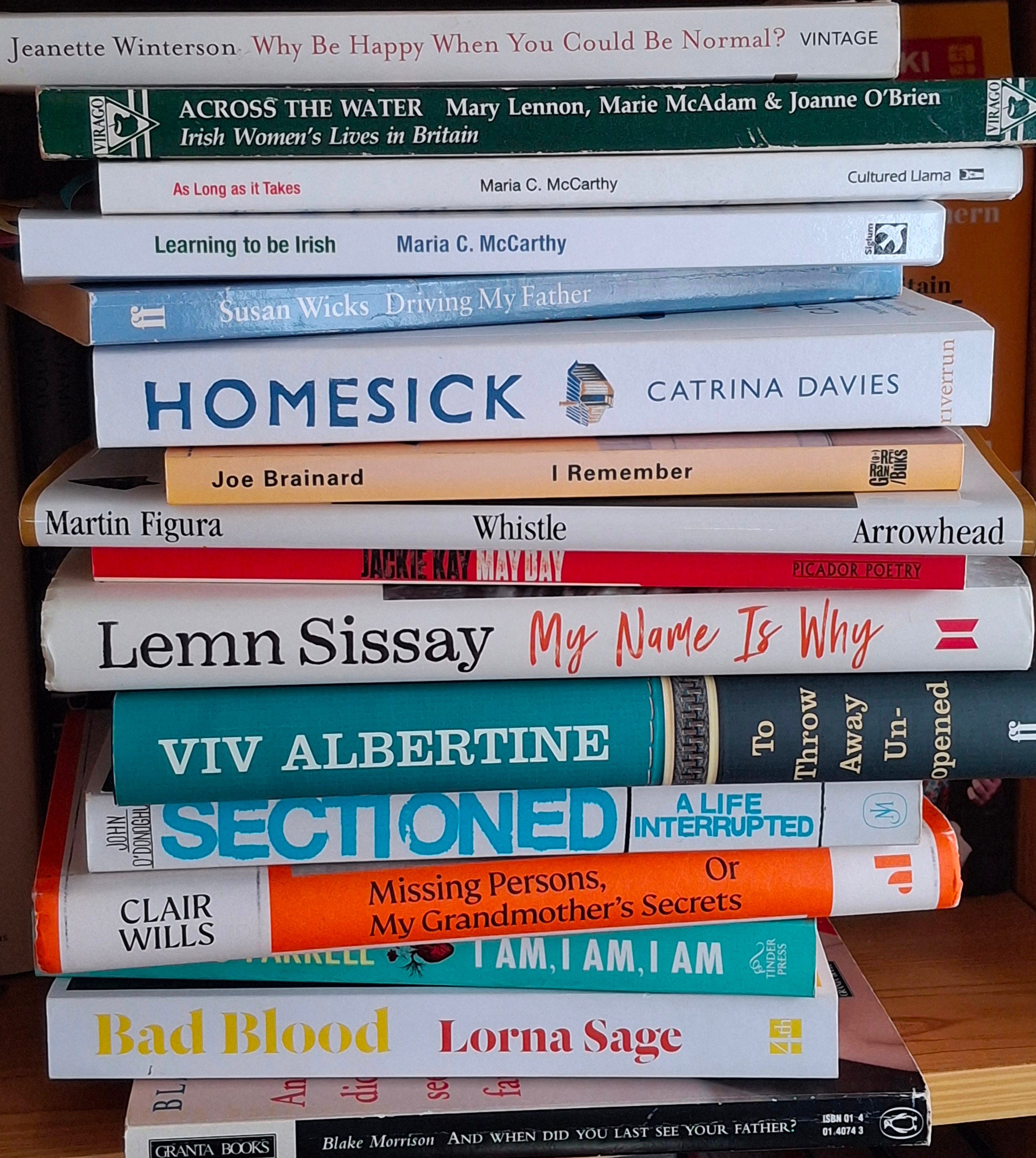
To mark St Patrick’s Day, Learning to be Irish is only £10 inc P&P until the end of March (UK orders only). My collection of linked short stories on Irish women and their English-born daughters, As Long as it Takes, is £8. To order, please email me, with your postal address, at maria(at)medwaymaria.co.uk , and I can send you a Paypal invoice.
Writing from Life
11 April, 10.00 - 12.00 at The French Hospital, Rochester
£12 early bird offer, £15 general admission
Join Maria C. McCarthy for a morning of inspiration, sparking ideas for writing memoir, poetry, fiction, or podcast material. Whether starting out, or a seasoned writer, this is the place for you. Working in a supportive and relaxed environment, there will be writing exercises based on your own life experiences, plus advice on how to develop and shape your writing.
Early bird fee for the first three people to book, plus a chance to add in a copy of Learning to be Irish at a reduced price.
Booking via Eventbrite.
Such a story I am sure affects many families Maria, and you told it with such respect to Gus.