
Confrontation
We’re aware that we have to live alongside people with different views, but we have to let them know that we don’t agree with them. Though sometimes we don’t.

Some years ago, I went along to a free meditation class. I gave my name and phone number when the registration sheet was passed around the room. Then listened to an introduction by a man in white robes. In his spiel, he said, ‘Disabled people are like that because of something they’ve done in a previous life.’
‘I’m not staying to listen to this, I said. I stormed out, expecting others to follow, Two minutes later I crept back in; I had left my bag behind. I mumbled something, and left again, angry not only at the robed-man, but those that had stayed to listen to him. Not one person joined me in my protest.
The man in the white robes phoned me the next day and asked why I’d left. ‘Because of what you said about disabled people,’ I said. ‘But it’s true,’ he said. ‘You’ll find it in the Bible: as you sow so shall you reap.’ I had not changed his mind, his beliefs, and he had not changed mine.
Last week, in Waterstone’s café in Maidstone with Bob, my husband, two women on the next table began by talking about Andrew, (formerly known as Prince, now Mr Mountbatten Windsor). One of the women thought it was ‘stupid’ to make Andrew into an ordinary mister. ‘These are not my people,’ I thought; but never one to miss an eavesdropping opportunity, I listened further. The conversation moved on to people coming over here and getting free treatment on the NHS when they haven’t ‘paid their stamp’. That’s National Insurance contributions, to anyone too young to know about your card being stamped.
Just as Bob and I were about to leave our table, one of the women said, ‘I deserve steak, especially as venison is so expensive these days.’
‘These are definitely not my people,’ I said to Bob, once we were out of earshot. ‘As a white-haired older woman, they give white-haired older women a bad name.’ I’d said nothing to them, as I didn’t want to admit to eavesdropping. Also, would anything I said to them have changed their minds?
Bob came in the other afternoon after talking to a neighbour across the road. She is known as the nosiest neighbour in our road and, quite honestly, the least popular. We’ve got along fairly well with her, but are careful not to share our business with her. Our immediate neighbours are Romanian, a father and son. They work very hard, leaving home before 6am to work in London, fitting fire protection systems. At present they are working away on a contract in Belgium.
Mrs Nosy across the road asked Bob where our neighbours were. ‘Working abroad for a few weeks,’ he said. ‘Probably claiming benefits over here,’ she said. He ended the conversation somewhat dumbfounded. I think if you were to show Mrs Nosy our neighbours’ payslips and tax returns, she would still think they had no right to be here, and were only in the UK at her expense.
We are left wondering how to tackle this kind of thinking, this kind of exchange. All too often, we come away thinking of things we could have said afterwards. Bob doesn’t like conflict. My temper rises quickly in response to these kind of comments. We’re aware that we have to live alongside people with different views, but we have to let them know that we don’t agree with them. Though sometimes we don’t.
It can be possible to have discussions, and to change hearts and minds. I explained to a dear friend why Virginia Guiffre had taken so long to come forward, when her allegations against Andrew first become known. My friend was suspicious as to why she’d taken so many years to make the accusations. I shared with my friend that I’d made a report to the police of historic sexual abuse, 45 years after it had happened. It had taken me until then to fully realise that I’d been groomed and sexually assaulted by an older man who was my boyfriend at the time. My friend had just not understood, because it was outside of his experience.
If I were to tell my story to the white-haired older women in the café, to explain to them that it was just and right to strip Andrew of his titles, would I have changed their minds? Would a woman whose meal choices are between steak and venison have the capacity to understand? I would like to think so, but probably not, and I was not going to make myself vulnerable by speaking to her.
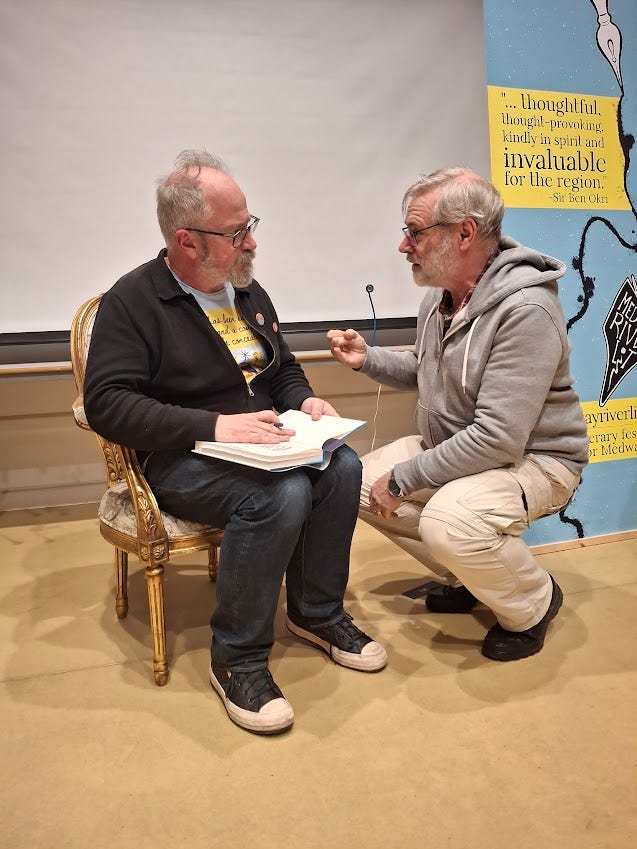
We saw Robin Ince last week at the Medway River Lit Festival, and he talked a great deal about standing up to hatred. He named several women he knows in his broadcasting and comedy circles who have had horrific online hatred directed towards them for daring to speak in favour of trans people. Often the hatred is led by Graham Linehan, a fallen hero in my book. The co-creator of Father Ted now makes his mission to spread hatred, to troll former friends of his, like Victoria Coren-Mitchell.
One of Bob’s daughters is trans, and Bob constantly becomes distressed at anti-trans comments online by people he has known for years, as well as hateful posts by those he doesn’t know personally. As for the nasty comments thrown at my stepdaughter in public, what is wrong with those people? It seems like views have become so polarised, especially online, that a proper and respectful exchange of views has become nigh-on impossible.
I don’t know what the answer is, how to state your case and have a respectful exchange of views, maybe change someone’s mind, or have your own opinion altered. I find it hard to remain silent, but how do you speak your truth without getting shot down and come away without feeling angry, attacked and wounded?
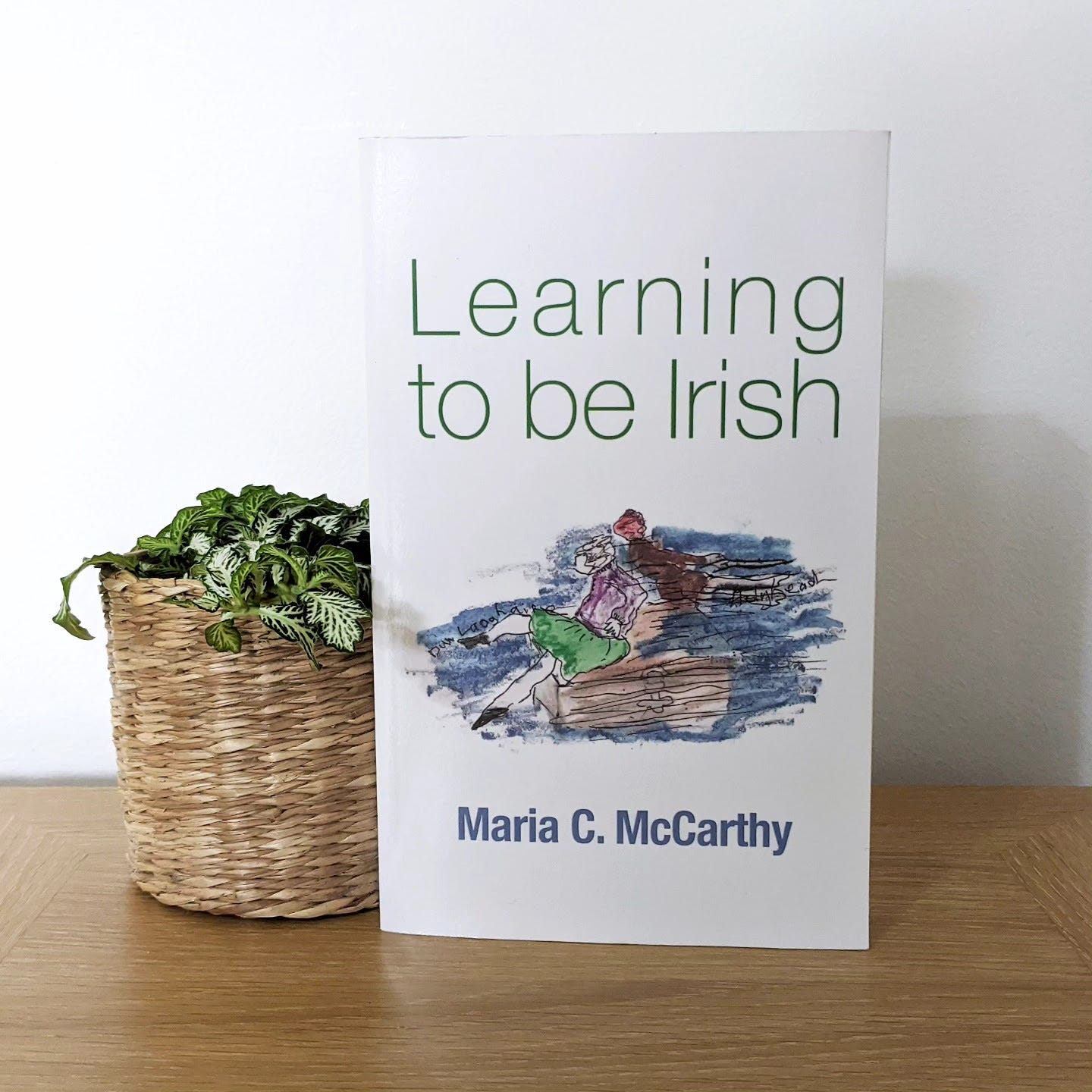
Thanks to R.C. Thomas, Plymouth Laureate of Words, for his review of Learning to be Irish, in his latest newsletter. I had the good fortune to publish two of Richard’s poetry collections, The Strangest Thankyou and Zygote Poems, when I was poetry and fiction editor with Cultured Llama Publishing. I am also the proud owner of a T-shirt that he designed.
Learning to be Irish is Maria C. McCarthy’s latest book, which compiles short stories and poems, as well as memoir about her Irish inheritance and growing up in the UK, feeling unable to be proudly Irish. It also documents Maria’s attempts to reconnect with her Irish blood whilst acknowledging history face on.
‘… there was only one other girl from an Irish family in the whole of my new school … Her accent was now blending with the girls at school. It was as if she was learning to be English.’
Highly recommended if you’re interested in reading about different lives and cultures. Grab a copy from www.medwaymaria.co.uk
Well said, Maria, this chimes in so with my own experience.
I've always been accepting of people with different opinions to mine but recently some of those views have taken a very nasty, extreme turn and I find that difficult to deal with. I find I have to walk away from certain debates or awkward situations-something I would not have done until recently-when really I should challenge those views. People seem so much angrier now and often their anger is aimed at the wrong people.